
Virtual GI care for adults across the U.S. · Often seen as soon as tomorrow
OshiJournal Book a virtual visit
A reader’s journal · Digestive care in America

I waited four months for a GI. Then I got seen from my kitchen the next day.

If bloating, reflux, or an 11-minute office visit is running your week, this is what changed mine: a virtual GI team that sees adults in all 50 states — often as soon as tomorrow.

Published September 12, 2026 United States 18-minute read
Lauren Hale at her kitchen table before a virtual GI visit

Home in Columbus — the same table where I now take my visits.

Virtual visits in all 50 states Often seen as soon as tomorrow In-network with most major plans 18+ only · Not Medicare/Medicaid
Check if you can get seen this week → Create an account and book the first visit. Coverage depends on your plan.
Columbus, Ohio

For three years the next available GI was always “late winter.”

My name is Lauren. I am 41. I live on the east side of Columbus with my husband Matt, our son Eli, who is nine, and Nora, who is six. I manage campaigns for a mid-size company. I pack lunches. Until last spring, I also planned every meeting around bathroom access.

For three years I was told my gut was “just stress,” that the next gastroenterologist was booked into late winter, and that I should try a probiotic and come back if it got worse. It got worse. I came back. The next available date had moved again.

What changed was the way I got care. Oshi Health is a virtual GI clinic: a GI provider, a registered dietitian, and a gut-brain specialist on one team, from home, often as soon as the next day. If you are still waiting on a referral, this is the path I wish I had taken sooner.

A Sunday in March · the floor of my own bathroom

It started as “a sensitive stomach.” It ended with me canceling a birthday.

Eli’s birthday is in March. We had reserved a bowling lane. I had already ordered the cupcakes. At 10:40 that morning I was on the bathroom floor with cramping so sharp I could not stand up straight, bloated in a way that made my jeans feel like a medical device, and trying to decide whether this was “just IBS” or the kind of pain you are supposed to take to an ER.

Matt stood in the doorway with the car keys. I told him to take the kids. I would meet them. I did not meet them. I spent the afternoon on the couch with a heating pad, answering the group text with a thumbs-up I did not mean.

That night Matt said, quietly, “This is not a sensitive stomach anymore.” He was right. I had been managing around my gut for so long that I had started to treat a canceled Sunday as normal.

The years before that Sunday

Bloating. Reflux. The kind of pain you schedule your life around.

Bloating that made me look twelve weeks pregnant by 3 p.m. Acid reflux that woke me at 1 a.m. Constipation that lasted days, then a swing the other way that kept me home from the office. Undiagnosed, officially. “Possible IBS.” “Maybe gastritis.” “Let’s rule things out.”

Oshi Health treats hundreds of GI symptoms and conditions — IBS, GERD and reflux, SIBO, Crohn’s, ulcerative colitis, celiac, food intolerance, fatty liver, GLP-1 digestive issues, nausea, diarrhea, constipation, motility problems, pancreatitis, gallbladder issues, and the huge category nobody wants: undiagnosed GI symptoms. I did not need every item on that list. I needed someone who would look at the whole list and not send me home with a pamphlet.

The American wait

Four months. Then they rescheduled me by three more weeks.

I did what you are supposed to do. I asked my primary care doctor for a GI referral. The scheduler was kind. The first opening with a gastroenterologist in my network was 17 weeks out. I took it. Two weeks before the appointment, the office called: the physician had a conflict. The next slot was after Memorial Day.

I sat in the grocery parking lot with the referral still in my bag. I had insurance. I had a calendar. I did not have a doctor this month.

“I had a referral, insurance, and a calendar. What I did not have was a doctor this month.”
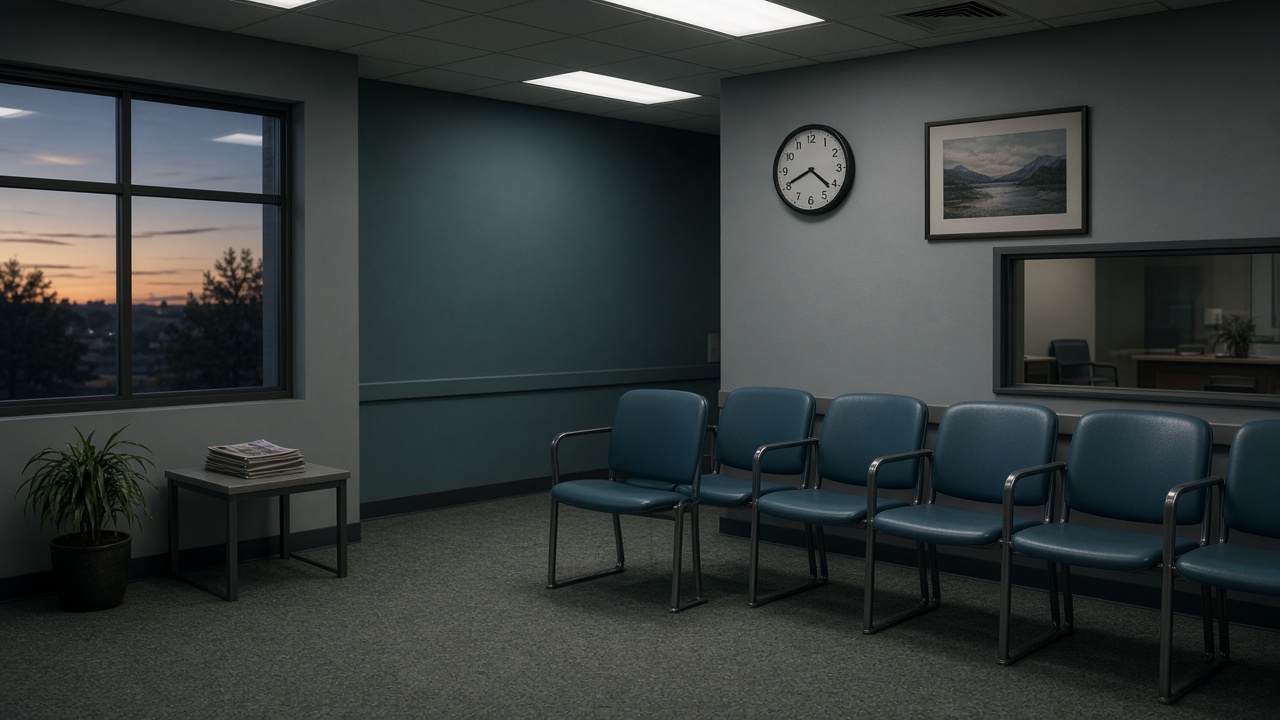
An empty clinic waiting room late in the afternoon

The kind of waiting room where your number is called two hours late.

The 11-minute visit

She was not unkind. She just did not have time to be a team.

When I finally got into the office, the gastroenterologist was professional. She asked the standard questions. She ordered a few labs. She mentioned a low-FODMAP handout I could print. The visit lasted eleven minutes. I know because I looked at my phone in the parking garage.

American specialty care is built on volume. What I needed was not a more charming eleven minutes. I needed someone who could stay with the problem: food, stress, sleep, medications, the way my symptoms spiked after a deadline, the way they quieted on vacation and then roared back on Sunday night.

Oshi later explained their model in a way that finally made the 11-minute visit make sense. Traditional GI care is often one specialist, one visit, one bill. Oshi is built as an integrated team — GI providers who can diagnose, prescribe, and order labs; registered dietitians for tailored nutrition; gut-brain specialists for the feedback loop between symptoms and the rest of your life — plus unlimited virtual visits and in-app chat. That is a different machine.

A Tuesday at work · the Slack message I almost ignored

“My cousin used this GI clinic on her phone. She got in the next day.”

Priya sits two desks over. She is the person who knows every restaurant that will actually accommodate a restriction without making a face. She sent me a link and a sentence: Oshi Health. Virtual GI. They’re in-network with a lot of the big plans. My cousin in Denver got a visit on a Saturday.

I opened the site after the kids were in bed. They see patients in all 50 states. You must be 18 or older. They are not in-network with Medicare or Medicaid. Visits can happen as soon as tomorrow, including evenings and weekends. They report a 98% patient satisfaction score and more than 47,000 patients.

I also read the outcomes from a clinical trial with a national health plan: 92% of patients found relief in 10 weeks or less; 88% of undiagnosed patients got a clear diagnosis within 3 months; 64% decrease in emergency-room visits. I had already been to urgent care twice for “gastritis” that never quite resolved.

My first objection

I thought virtual GI care was a chatbot with a lab coat.

I told Priya I was not going to discuss bowel habits with a stranger on a laptop. She said, “You already discuss them with a stranger in a paper gown. At least this one can see you before August.”

I still had a list. You might have the same one:

Can they prescribe? Yes. Oshi clinicians diagnose, prescribe, and order lab tests, and they can work alongside an existing GI doctor if you already have one.

Is it just diet tips? No. You get medical care, nutrition, and gut-brain support on one team. If stress changes your bathroom and your bathroom changes your week, that loop is part of the visit — not a slogan.

Will insurance take it? Oshi is in-network with most major commercial plans. Self-pay is $150 a visit and HSA/FSA eligible. With coverage, most patients get a year of unlimited care and are billed for about four in-network specialist visits, plus ordinary copays and deductibles. Check your plan when you book.

Thursday night · I booked it

The first visit was the next evening. I was still in my work sweater.

Signing up took less time than transferring a prescription. I created an account, answered questions about symptoms and history, entered insurance, and picked a time. The first opening was Friday at 6:30 p.m. I took it before I could talk myself out of it.

The path is four steps: book the first visit, meet a GI provider online, start a personalized care plan, and keep the team for follow-ups and flares. Here is what that looked like in my house.

Lauren on a virtual visit with a GI provider at her kitchen table

Friday, 6:31 p.m. — first visit, from the kitchen.

The first visit

She asked questions my last GI did not have eleven minutes for.

The provider did not rush me through a checklist and then stand up. We talked about the March birthday I missed, the 1 a.m. reflux, the foods I had already cut (dairy, then garlic, then coffee, then joy), the two urgent-care visits, the family history, the GLP-1 my sister is on and the digestive chaos that came with it, the way I clench through presentations and then spend the afternoon in the stall.

She explained that Oshi’s first job is to look at history, symptoms, and goals and build a plan — not to sell me a scope on day one. They review prior records when they can. They try not to duplicate expensive testing. If labs or imaging are needed, care coordinators help find an in-network location. That is the “concierge” part, and I did not know I needed it until I did not have to call three imaging centers myself.

I hung up and sat very still. Matt said, “You look like someone finally handed you a map.” I said, “I look like someone who just cried on a Zoom.” Both were true.

The part I did not expect · the dietitian

I thought I already “ate clean.” I was just eating scared.

Oshi dietitians are GI-specific. Kaitlin Voicechovski, MS, RD, LDN, leads the nutrition program — more than a decade in evidence-based care, including advanced FODMAP training with Monash University. The person I saw worked in that same system, not a generic calorie app.

We did not throw out my entire kitchen. We mapped what I actually eat on a Tuesday in Ohio. The “healthy” salad at my office café was wrecking me. I had cut so many foods that I was undereating and then overeating at 9 p.m. The plan was built for my week, not a PDF for every American with a stomach.

The part I resisted · the gut-brain specialist

“So you think this is in my head.” I almost quit there.

When they suggested a gut-brain specialist, I felt the old insult rise up. I have been told my pain was anxiety by people who had not looked at my food, my labs, or my calendar. I almost canceled.

A disorder of gut-brain interaction does not mean you invented the pain. The wiring between the enteric nervous system — the network in the gut wall — and the rest of you can get noisy. Stress slows motility. Pain creates more stress. Treating only lunch, or only the loop, is why so many people stay stuck.

Guylene Velez, LCSW, is one of Oshi’s gut-brain specialists. The work was practical: how I brace before a long car ride, how I hold my breath in meetings, what happens to my gut on Sunday nights. I stopped treating every cramp as a five-alarm fire. Fewer of them turned into one.

Week three

The first Saturday I did not plan around a bathroom.

Week three was quieter, not a miracle. I went to Eli’s soccer game and stayed for the whole thing. I ate a bagel I had been afraid of for a year — because we had a plan for what to do if it went badly, and it did not.

I used the app chat twice that week. Once about a new cramp. Once about a restaurant. Someone answered. That sounds like a small thing until you have left a voicemail for a GI office and received a callback nine days later.

Oshi’s ongoing model is the part traditional care cannot copy easily: unlimited visits as needed, 24/7 chat, a support line that is not an ER but can help you decide what to do, evening and weekend appointments, care coordinators for records and referrals. You are not starting over with a new stranger every time the portal resets.

Lauren cooking a normal weeknight dinner after getting GI care

A weeknight dinner that did not need a strategy.

Week eight · a restaurant, on purpose

We took the kids out. I ordered food. I did not scan for exits first.

There is a pizza place near us that I had not entered in two years. Not because pizza is forbidden forever. Because I did not trust a public restroom situation on a Friday night. We went. I did not have a perfect night. I had a normal night. Matt looked at me over the table like a man who had gotten his wife back from a very boring hostage situation.

That is the metric I care about. Not a before-and-after selfie. A Friday that did not require a strategy document.

What you get when you sign up

A GI clinic on your phone — not a supplement shop.

Whole-person gastrointestinal care from a dedicated team, delivered virtually, for adults 18 and older in every U.S. state. You do not need a diagnosis to start.

Results Oshi reports

The numbers that got me to book.

98%

Patient satisfaction score Oshi reports across thousands of visits.

92%

Of patients found relief in 10 weeks or less, in a trial with a national health plan.

88%

Of undiagnosed patients got a clear diagnosis within 3 months, same source.

They also report a 64% decrease in ER visits in that trial, 47,000+ patients served, and next-day visits including evenings and weekends. Individual results vary.

Your care team

The specialists who lead Oshi’s GI care.

A gastroenterologist as chief medical officer, plus GI providers, dietitians, and gut-brain specialists who work the same plan — not three separate waitlists.

Dr. Sameer K. Berry

Sameer K. Berry, MD, MBA

Chief Medical Officer and gastroenterologist. Co-founder. Published researcher in digital and value-based GI care; dual role at NYU Grossman School of Medicine.

Kaitlin Voicechovski

Kaitlin Voicechovski, MS, RD, LDN

Lead registered dietitian. 10+ years in evidence-based nutrition. Advanced FODMAP training with Monash University.

Michael Currier, PA-C

Michael Currier, PA-C

GI provider. The kind of clinician who runs the first visit: history, symptoms, a plan you can actually start this week.

Guylene Velez, LCSW

Guylene Velez, LCSW

Gut-brain specialist. Helps patients handle the emotions that change symptoms — and the symptoms that change everything else.

CEO Sam Holliday started Oshi after his mother was handed a low-FODMAP printout for IBS, then flared after a major life event and landed in the ER.

What Oshi treats

If your symptom is on this list, you can get seen for it.

How it works

Four steps from signup to a team you can actually reach.

  1. Book the first visit. Account, symptoms, insurance, a time that is actually soon — including nights and weekends.
  2. Meet the GI provider. History, goals, and a plan you can start the same week.
  3. Start the team plan. Medical care, nutrition, gut-brain work, and only the tests you need.
  4. Keep the channel open. Chat, follow-ups, and flare support — not one appointment and silence.

The longer walkthrough is on the how it works page. You are opening a year with a team, not buying a single Zoom.

What patients say

Other people who got in without the four-month wait.

“It was amazing to finally see a healthcare provider that listened and came up with real solutions to issues I have been having for years.”

M.M. · treated for GERD

“Quick, easy, and convenient. Not having to leave the house for a visit is especially helpful because of the symptoms I experience.”

K.W. · treated for abdominal pain

“For over 25 years, I struggled with reflux, colitis, and other issues. Oshi changed everything. They treated me as a whole person.”

Bo · treated for reflux and colitis

“I found Oshi on a Friday and got a consultation that Saturday morning.”

M.S. · treated for gastritis and ulcers, after an ER overnight

“I’ve finally found a resolution to my symptoms, which I’ve never been able to achieve… it’s made a huge difference for me.”

Danielle S. · IBS-C

“Oshi Health was the first time I actually felt listened to… I finally found symptom relief — all without needing costly procedures.”

Jennifer · Texas · treated for Crohn’s disease
Before you book

Who Oshi is for — and who should go elsewhere tonight.

Go to an ER for chest pain, black stool, vomiting blood, or fainting. Oshi is virtual GI care, not an emergency department.

You need to be 18 or older and on a commercial plan, or ready to self-pay. Oshi does not accept Medicare or Medicaid right now.

You can start without a diagnosis. Chronic conditions still need ongoing control. The point is a team that stays with you after the first visit.

Some tests still happen in person. Oshi can prescribe and order labs and imaging, then help you find a local site when a body needs to be in a room.

A later afternoon · Matt, again

“You stayed for the whole movie.”

Matt is not poetic. In June he said that sentence while loading the dishwasher, which in our marriage is a standing ovation. I had not become a new person. I had become a person who could sit through a movie. I had a plan for travel. I knew who to message if a flare started on a Thursday. I stopped treating every grocery trip like a risk assessment.

Priya asked if I would tell other people at work. I said I would tell anyone still sitting on a waitlist that is longer than a season. That is most of the people I know.

“I did not need a different stomach. I needed a different way to get care for the one I have.”
Before you book

Questions I searched at 11 p.m.

What is Oshi Health, in one paragraph?
Oshi Health is whole-person virtual GI care: GI providers, registered dietitians, and gut-brain specialists, with visits often available within days. They treat diagnosed conditions and unexplained symptoms. Care runs through their app — visits, chat, the plan — and is available to adults 18+ in all 50 U.S. states.
Do I need a diagnosis before I sign up?
No. Oshi treats unexplained symptoms as well as named conditions. In a partner trial, 88% of undiagnosed patients received a clear diagnosis within three months.
How fast can I actually be seen?
Visits are often available as soon as tomorrow, including evenings and weekends. I booked a Friday evening slot the day after I signed up. Pick a live time in the booking flow.
Is it covered by insurance?
Often, if you have a major commercial plan. Not Medicare or Medicaid. In-network patients typically pay toward about four specialist visits for a year of unlimited team care, plus whatever copays and deductibles your plan already uses. Self-pay is listed at $150 per visit. HSA/FSA eligible. Confirm during signup.
Can they prescribe and order tests?
Yes. They diagnose, prescribe, and order tests, can work with an existing GI doctor, and help coordinate outside labs or imaging so you are not running your own referrals.
What happens after the first visit?
A personalized plan that may include medication, nutrition, gut-brain work, and only the testing that is justified. Follow-ups and unlimited chat. The number of visits depends on you, not on a package of three.
What if this is an emergency?
Call 911 or go to an emergency department. Book Oshi for ongoing GI care — bloating, IBS, reflux, IBD, undiagnosed symptoms — not for a medical emergency.

If you are still on a waitlist, you can get seen this week.

A licensed virtual GI team sees adults in every U.S. state — often as soon as tomorrow. Create an account and pick a time.

Ages 18+ · All 50 states · Not Medicare or Medicaid · First visit often available within days

Oshi Health provides virtual GI care for adults 18+ in all 50 U.S. states and does not currently accept Medicare or Medicaid. Individual results vary. Coverage and appointment times depend on your plan and live inventory. If you have a medical emergency, call 911 or go to an emergency department.